SPONSORED CONTENT   ·   BASED ON 22 YEARS OF VETERINARY BEHAVIORAL EXPERIENCE

After 22 Years In Veterinary Practice, A Behavioral Vet Reveals The 5 Comfort Principles That Calm An Anxious Dog Faster Than Medication

And Why Most Dog Owners — Even Those Who Have Spent Thousands On Trainers — Have Never Been Shown Them

By Eleanor Hartwell   |   Senior Editor, Modern Companion Quarterly 

5-min read

Title

Margaret had lived with dogs her whole life.


She'd raised a Labrador through the 90s. She'd taken in her sister's old terrier when she passed. And after her husband died in 2021, she adopted a rescue spaniel named Bonnie to keep the house from feeling so quiet.

Bonnie was sweet. Affectionate. And the moment Margaret picked up her car keys, she fell apart.


The whining started before the door even closed. By the time Margaret returned an hour later, Bonnie had scratched the doorframe raw, wet the rug, and was pacing in tight circles with her tail tucked. Margaret stopped going to her Tuesday book club. Then she stopped going to the shops if it would take more than twenty minutes. By the end of last summer, she was, in her own words, a prisoner in her own home, with the saddest little jailer you've ever met.

I felt like I was failing her. I'd give her treats. I'd leave the radio on. I'd come home to find her shaking on the kitchen floor. Every vet visit was another £80 and another shrug.

She's not alone. Across the country, hundreds of thousands of dog owners — most of them over fifty, most of them living with one beloved dog — are walking on eggshells around an animal they love but can't seem to comfort.

the behaviors no one warned you about

If you live with an anxious dog — and especially if your dog has only become anxious in the last few years — you've probably seen at least three of these:

Whining, crying, or barking the moment you reach for your keys, your shoes, or your coat

Pacing in circles, panting, or trembling when left alone — even for ten minutes

Scratching at doors, chewing the furniture, or having accidents indoors despite being house-trained for year

Hiding under beds or behind sofas during thunderstorms, fireworks, or even ordinary household noises

Following you from room to room, unable to settle, even when nothing is wrong

Looking exhausted and unsettled even after what should have been a full night's sleep

Most owners of anxious dogs experience at least four of these regularly.


And here's the painful part: it makes you feel like the problem is you. Like maybe you're spoiling her. Like maybe you should never have got a rescue. Like maybe the dog would be calmer with someone else — someone home more, someone younger, someone who knows what they're doing.


But the actual reason has nothing to do with you, your schedule, or your dog's past.

the real reason nothing has worked so far

Most owners of anxious dogs — even ones who have spent thousands on trainers, calming chews, and vet appointments — were never shown the five specific comfort principles that separate a constantly stressed dog from a settled one. These are the principles veterinary behaviorists use, but rarely teach in a fifteen-minute consultation.


This isn't an exaggeration.


Dr. Helena Pierce has been a veterinary behaviorist for 22 years. She's worked in private practice, lectured at three veterinary schools, and consulted for two of the largest rescue organizations in the country. After two decades of treating anxious dogs, she noticed something that bothered her:

Every behaviorist I knew used the same five comfort principles before reaching for medication. Every dog owner I treated had been shown maybe one of them — and usually badly. The rest were just… gatekept. Not on purpose. Just because nobody bothered to put them into something an owner could actually use at home.

— Dr. Helena Pierce, DVM, Veterinary Behaviorist

The result is what Margaret experienced. Treats given correctly. Walks done correctly. Crate trained correctly. And then — at the actual moment the dog panics — none of it helps, because the owner was never shown the principles that make the difference between a dog who copes and a dog who collapses.

and here's why everything you've tried so far has failed you

If you've been struggling with an anxious dog, you've probably tried solutions. Most owners try at least two of these. Here's why none of them worked the way you hoped:

Private dog trainers?

Most are obedience trainers, not behaviorists. They can teach a dog to sit. They cannot teach a dog to feel safe. And they charge £80–£200 a session to find this out.

Calming chews and CBD treats?

They take the edge off mildly anxious dogs. They do almost nothing for a dog whose nervous system is already in panic. And the better ones cost £40 a month, every month.

Anxiety vests and Thundershirts?

The gentle pressure helps some dogs during a single event. But it has to be put on, taken off, and never gives the dog a place that is permanently safe.

Trazodone, gabapentin, or Prozac?

Veterinary medications work — for some dogs, in some cases. But every behaviorist agrees they should be the last step, not the first. And no medication will calm a dog who has no safe place to land.

Until now.

Show Me The 5 Principles →

the five comfort principles that change everything

Dr. Pierce, working with a small team of veterinary behaviorists and product designers, finally built a single object that delivers all five comfort principles at once. No training. No medication. No daily routine for the owner to remember.


Here are the five:

1

The full-body hug

A dog's nervous system reads physical pressure on its sides as the presence of mother and littermates. A U-shaped raised rim recreates that pressure on three sides at once — the single fastest way to switch a dog from alert to relaxed.

2

The chin rest

Anxious dogs hold their heads up scanning the room, even when lying down. A raised front edge gives the chin a place to settle. The moment the chin lowers, the heart rate begins to drop. Most ordinary beds are flat and don't allow this.

3

The texture cue

Newborn puppies are conditioned for safety by the softness of their mother's coat. Deep-pile faux fur of a specific length triggers the same recognition response in adult dogs — even ones who have been anxious for years.

4

The thermal anchor

Anxious dogs lose heat through their paws and belly when panicked. A self-warming filling holds the dog's own body warmth in place around them, which the nervous system interprets as another body close by — even when no one is home.

5

The owned space

A dog with no designated safe place is a dog on duty 24 hours a day. The single most overlooked principle in behavioral work: an anxious dog needs one object, present in one place, that is unambiguously theirs. Not the sofa. Not the floor. Theirs.

Once Margaret was shown these — actually shown them, with a single object she could put in her living room and step away from — Bonnie's behavior changed within a week. By the end of the second week, Margaret went to her Tuesday book club for the first time in fourteen months.

It wasn't that she couldn't be calmed. It was that I'd never been given the part nobody talks about. — Margaret B., 68, with Bonnie (rescue spaniel, age 7)

the object margaret used

Dr. Pierce and her team didn't stop at writing the five principles down. They went on to design a single, simple object that delivers all of them at once — no instructions for the owner, no learning curve for the dog.

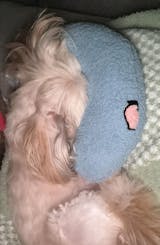
They built it as a U-shaped plush pillow. Deep-pile faux fur. Self-warming filling. Raised chin rim. Machine washable. The kind of thing you put on the floor next to the sofa once, and never have to think about again.


It's called ThePupperly™ Calming Pillow. And right now — during the anniversary giveaway — it's free. There's only a small fee to cover shipping.


What's included with your pillow:

The full U-shaped Calming Pillow with raised chin rim

Deep-pile faux-fur exterior in your choice of color

Self-warming, body-supporting fill that recreates littermate pressure

Machine-washable cover for easy cleaning at 30°C

Designed by veterinary behaviorists, not toy designers

Suitable for puppies, anxious adults, and senior dogs alike

Fast & Secure Delivery in 5–9 Working Days

It's the object Dr. Pierce wishes every owner of an anxious dog had been handed on day one. The one Margaret wishes had been waiting for her when she brought Bonnie home from the rescue centre.

Over 60,000 dog owners

most of them caring for one beloved older dog — now keep this pillow in their living room.

WHAT DOG OWNERS ARE SAYING

CLAIM YOUR FREE PILLOW

Free during our 2nd anniversary giveaway

During our anniversary giveaway, ThePupperly™ Calming Pillow — built around all five of Dr. Pierce's comfort principles — is available completely free. There's a small fee to cover shipping. After the giveaway ends, the pillow returns to its regular price.


Regular price $29.99   Free today


If you've been watching your dog struggle — hiding under the bed, pacing in circles, scratching at doors — this is the object that changes that.

Claim Your Free Pillow →


Just cover shipping · Ships within 24 hours

🛡 30-Day Calm-Or-Refund Guarantee ★ 4.82 / 5 from 6,000+ reviews 🐾 Designed by veterinary behaviorists

ThePupperly™ · The Calming Pillow — Sponsored editorial. Names of customers featured may be changed for privacy. Photographs are illustrative. Results vary between dogs; ThePupperly™ Calming Pillow is a comfort product and is not a substitute for veterinary care.

free during our 2nd anniversary giveaway

Claim Your Free Pillow →